Frigidaire Dishwasher Instructions: A Comprehensive Guide (Updated 12/22/2025)
Welcome! This guide, updated today – 12/22/2025 – provides detailed instructions for your Frigidaire dishwasher, referencing resources like ManualsLib for optimal performance.
Congratulations on selecting a Frigidaire dishwasher! This appliance is designed to provide years of reliable cleaning performance, simplifying your kitchen routine. This introduction serves as your starting point for understanding its features and operation. Referencing resources like the Frigidaire 154427301 User Manual (found on Manualzilla) will greatly enhance your experience.
This comprehensive guide, updated as of December 22, 2025, will walk you through everything from initial setup and understanding the control panel to troubleshooting common issues and maintaining your dishwasher. We aim to ensure you maximize the efficiency and longevity of your new appliance. Familiarize yourself with this manual to unlock the full potential of your Frigidaire dishwasher and enjoy sparkling clean dishes every time.

Safety Precautions
Important: Your safety is paramount when operating this Frigidaire dishwasher. Always disconnect the power supply before performing any maintenance or cleaning. Never allow children to operate the dishwasher unsupervised, or to play with its controls. Ensure proper grounding to prevent electrical shock, adhering to the Electrical Connection Guidelines detailed later in this manual.
Avoid using flammable liquids near the dishwasher. Do not tamper with safety devices. If the power cord is damaged, it must be replaced by a qualified technician. Refer to the Frigidaire 154427301 manual for specific warnings regarding detergent usage and potential hazards. Prioritize these precautions to ensure a safe and enjoyable dishwasher experience.
Important Safety Instructions
Read Carefully: To reduce the risk of fire, electric shock, or injury, always follow these crucial safety instructions. Do not store or use flammable materials in or near the dishwasher. Never attempt to repair the appliance yourself; contact a qualified service technician. Ensure the dishwasher is properly installed and grounded, following all Electrical Connection Guidelines.
Always load dishes carefully to avoid breakage or injury. Do not operate the dishwasher if the door cannot be properly latched. Keep children away during operation. Refer to the Frigidaire manual (154427301) for detailed safety warnings and precautions. Ignoring these instructions could result in serious consequences.
Electrical Connection Guidelines
Grounding Required: Your Frigidaire dishwasher must be properly grounded. This appliance is designed for use with a standard 120-volt, 60Hz electrical supply. A dedicated 15-amp circuit is recommended to prevent overloading. Never use extension cords or adapters. Ensure the power cord is not pinched or damaged.
Installation should be performed by a qualified electrician, adhering to all local codes and regulations. Improper electrical connection can create a shock hazard and void the warranty. Refer to the Frigidaire dishwasher manual (154427301) for specific wiring diagrams and grounding instructions. Always disconnect power before performing any maintenance or repairs.
Getting Started: Initial Setup
Initial setup is crucial for optimal performance. Begin by carefully removing all packing materials, both inside and outside the dishwasher. Before connecting to water and power, verify all components are present and undamaged. Consult your Frigidaire dishwasher manual (like model 154427301 found on ManualsLib) for a complete parts list.
Next, connect the water supply and drain hose – detailed instructions follow. Ensure the dishwasher is level; unevenness can cause noise and poor cleaning. Finally, run a short rinse cycle before loading dishes to flush out any manufacturing residue. This initial setup ensures a clean and efficient start.
Installing Water Supply & Drain Hose
Proper hose installation is vital to prevent leaks and ensure efficient operation. Connect the water supply line to the dishwasher’s inlet valve, using a new supply hose – avoid reusing old ones. Hand-tighten, then use a wrench to tighten a half turn further.
For the drain hose, connect it to the garbage disposal or a dedicated drain standpipe, ensuring a high loop is present to prevent backflow. Secure the hose with a clamp. Refer to your Frigidaire manual (e.g., 154427301 on ManualsLib) for specific diagrams. Always check connections for leaks after installation before powering on.
Leveling the Dishwasher
Achieving a level installation is crucial for optimal washing and draining performance. Use a bubble level placed inside the dishwasher tub. Adjust the leveling legs – typically located at the front corners – by rotating them clockwise to lower and counterclockwise to raise.
Ensure the dishwasher is stable and doesn’t rock. A slightly tilted back position aids in drainage. Refer to your Frigidaire dishwasher’s manual (like model 154427301 found on ManualsLib) for detailed diagrams of the leveling leg adjustment process. Proper leveling prevents excessive noise and ensures water doesn’t pool during cycles.
Understanding the Control Panel
Your Frigidaire dishwasher’s control panel is the central hub for selecting wash cycles and options. Familiarize yourself with the layout, typically featuring a digital display and buttons or a dial. Common cycles include Normal, Heavy, Delicate, and Quick Wash.
Explore option settings like Sanitize, Heated Dry, and Delay Start. The manual (referenced in resources like ManualsLib, model 154427301) provides a detailed explanation of each function. Understanding these controls allows you to customize wash cycles for specific dish types and soil levels, maximizing cleaning efficiency and protecting your valuable dishware.
Cycle Selection Overview
Frigidaire dishwashers offer a variety of cycles to tackle different cleaning needs. The Normal cycle is ideal for everyday loads with moderate soil. For heavily soiled pots and pans, select the Heavy Duty cycle. Delicate items benefit from the Delicate/China cycle, using a gentler wash action.
A Quick Wash cycle provides a faster cleaning option for lightly soiled dishes. Some models include specialized cycles like Sanitize for enhanced hygiene and Auto, which adjusts settings based on soil levels. Refer to your Frigidaire dishwasher manual (like model 154427301 on ManualsLib) for a complete cycle description and recommended usage.
Option Settings Explained (Sanitize, Heated Dry, etc.)
Frigidaire dishwashers enhance cleaning with several option settings. Sanitize raises water temperature for superior germ removal, ideal for baby bottles or cutting boards. Heated Dry utilizes a heating element for faster, more thorough drying – consider energy usage. Delay Start allows scheduling washes for off-peak hours, potentially saving on electricity costs.
The Hi-Temp Wash option boosts wash temperatures for stubborn food residue. Some models feature Sani Rinse for extra sanitation. Explore your specific model’s manual (resources like ManualsLib offer Frigidaire manuals, e.g., 154427301) to understand each option’s function and impact on cycle time and energy consumption.

Loading Your Dishwasher Correctly
Proper loading maximizes cleaning performance. Avoid overcrowding; items need water circulation. Face soiled surfaces towards the spray arms. Ensure tall items don’t block the arm’s rotation. Check your Frigidaire dishwasher manual (like the 154427301 model on ManualsLib) for specific diagrams.
Secure lightweight items to prevent shifting during the wash cycle. Don’t load glasses or cups directly over prongs. Proper placement prevents breakage and re-washing. Refer to the user manual for detailed loading guides, ensuring optimal results and preventing potential damage to your dishes and the dishwasher itself.
Upper Rack Loading Tips
The upper rack is ideal for delicate items like glasses, cups, and small bowls. Ensure these items are securely placed to prevent chipping or breaking during the wash cycle. Adjust the rack height, if available on your Frigidaire model (check manual 154427301 on ManualsLib), to accommodate taller items.
Avoid overcrowding; water needs to reach all surfaces. Place items facing the center spray arm. Plastic items should be positioned away from the heating element to prevent melting. Refer to your Frigidaire dishwasher’s user manual for specific loading recommendations and diagrams, maximizing cleaning efficiency and protecting your valuable dishware.
Lower Rack Loading Tips
The lower rack is designed for larger, heavier items like pots, pans, and plates. Face soiled surfaces towards the center spray arm for optimal cleaning. Ensure tall items don’t block the detergent dispenser – consult Frigidaire manual 154427301 on ManualsLib for dispenser location.
Securely load large platters and baking sheets along the sides or back. Avoid nesting bowls or stacking items, as this hinders water circulation. Check your Frigidaire dishwasher’s manual for specific rack configurations and loading suggestions. Proper loading maximizes cleaning power and prevents re-washing, saving you time and energy.
Utensil Basket Usage
The utensil basket in your Frigidaire dishwasher is designed to accommodate various cutlery. Alternate utensil placement – forks and spoons facing up, knives facing down – to prevent nesting and ensure thorough cleaning. Avoid overcrowding; separate utensils for better water access.
For optimal results, refer to Frigidaire manual 154427301 (available on ManualsLib) for specific basket configurations. Some models feature adjustable dividers for customized organization. Long utensils can be laid flat if the basket lacks sufficient height. Regularly check and remove any food particles lodged between utensils for peak performance and hygiene.
Detergent & Rinse Aid
Achieving sparkling clean dishes relies on using the correct detergent and rinse aid. Frigidaire dishwashers are compatible with powder, gel, and pac detergents; however, always consult your model’s manual (like Frigidaire 154427301 on ManualsLib) for specific recommendations.

Proper detergent dispensing is crucial – use the designated compartment and follow dosage guidelines based on water hardness and soil level. Rinse aid minimizes water spots and enhances drying. Fill the rinse aid dispenser regularly, adjusting the setting for optimal results. Using quality products ensures efficient cleaning and prolongs dishwasher lifespan, as detailed in updated Frigidaire guides.
Recommended Detergent Types
Frigidaire dishwashers demonstrate versatility, accepting powder, gel, and pod (pac) detergents. However, high-quality detergents specifically formulated for automatic dishwashers are essential for optimal performance. While powder detergents are cost-effective, gels often dissolve more readily, preventing residue. Pods offer pre-measured convenience, minimizing waste.
Avoid using hand dish soap, as it creates excessive suds, potentially damaging the dishwasher. Refer to resources like the Frigidaire 154427301 manual (found on ManualsLib) for model-specific recommendations. Consider detergents with enzymes for enhanced stain removal and those containing bleach alternatives for whitening. Always follow dosage instructions based on water hardness and load size.
Proper Detergent Dispenser Usage

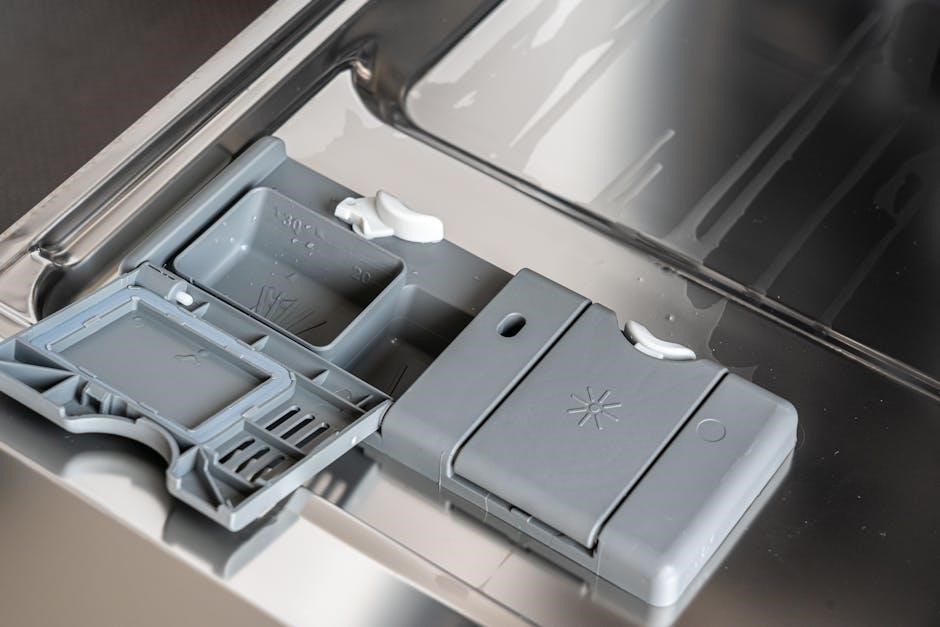
Locate the detergent dispenser, typically found inside the dishwasher door. For powder or gel detergents, fill the main compartment before starting the cycle. Ensure the detergent doesn’t obstruct the latch, allowing it to open during the wash. If using pods, place them directly into the bottom of the dishwasher – do not use the dispenser.

Refer to your Frigidaire manual (like the 154427301 version on ManualsLib) for specific dispenser details. Overfilling can lead to residue, while underfilling may compromise cleaning. Some models feature a pre-wash compartment for heavily soiled dishes; utilize this when needed. Always close the dispenser securely to prevent premature detergent release.
Rinse Aid: Benefits & Filling Instructions
Rinse aid significantly improves drying performance, reducing water spots and film on dishes. It works by lowering the surface tension of water, allowing it to sheet off surfaces. Your Frigidaire dishwasher has a dedicated rinse aid dispenser, usually located near the detergent compartment – consult your model’s manual (like Frigidaire 154427301 on ManualsLib) for precise location.

To fill, locate the rinse aid cap and carefully pour rinse aid until the indicator window shows full. Adjust the rinse aid level using the control panel settings; higher settings provide more assistance. Regularly check the rinse aid level, replenishing as needed. Using rinse aid ensures sparkling clean and dry results with every wash cycle.
Running a Wash Cycle
Starting a wash cycle on your Frigidaire dishwasher is straightforward. First, ensure the dishwasher is properly loaded, detergent is dispensed, and the door is securely latched. Select your desired cycle using the control panel – options range from Normal to Heavy Duty. Press the “Start” button to initiate the cycle.
For convenience, utilize the “Delay Start” feature. This allows you to schedule a wash cycle to begin at a later time, potentially during off-peak energy hours. Refer to your Frigidaire dishwasher manual (like model 154427301 found on ManualsLib) for specific instructions on programming the delay timer. Monitor the cycle progress via the display.
Starting a Normal Wash Cycle
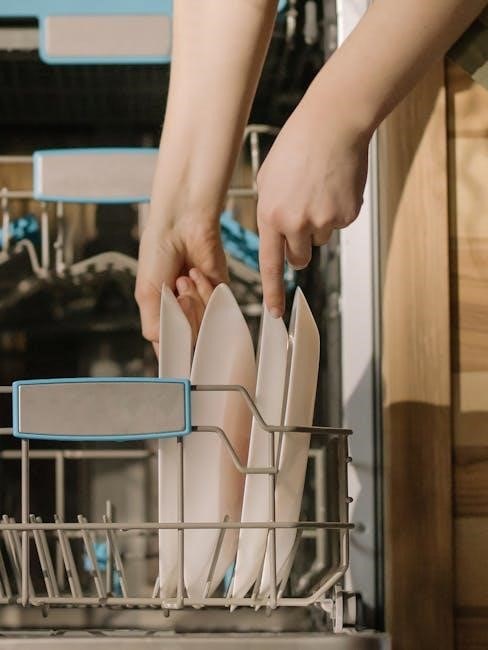
To begin a Normal wash cycle on your Frigidaire dishwasher, first confirm dishes are loaded correctly and detergent is added to the dispenser. Select the “Normal” cycle on the control panel – it’s designed for everyday cleaning. If desired, activate options like “Heated Dry” for enhanced drying performance.
Before initiating, ensure the water supply is connected and the drain hose is properly positioned. Press the “Start” button; the dishwasher will automatically fill with water and begin the wash process. Refer to resources like the Frigidaire 154427301 manual (available on ManualsLib) for detailed cycle timings and features. The cycle duration will vary based on selected options.
Using the Delay Start Feature
The Delay Start feature allows you to schedule your Frigidaire dishwasher to begin a cycle at a later time, potentially saving energy during off-peak hours. To activate, press the “Delay Start” button repeatedly until your desired delay time (typically in hours) is displayed.
Once set, press the “Start” button. The dishwasher will remain idle for the selected duration before automatically initiating the chosen wash cycle. Consult your Frigidaire dishwasher’s manual (like the 154427301 model found on ManualsLib) for specific delay time options and limitations. Ensure the door is securely latched for the delay to function correctly. This feature offers convenience and flexibility.
Troubleshooting Common Issues
Encountering problems? This section addresses frequent Frigidaire dishwasher issues. If your dishwasher isn’t draining, check the drain hose for kinks or clogs and ensure the knockout plug has been removed during installation. For poor cleaning, verify proper detergent usage and loading techniques – avoid overcrowding.
Refer to resources like ManualsLib’s Frigidaire 154427301 manual for error code definitions. Common codes indicate issues with water supply, heating, or the control panel. Before contacting service, try resetting the dishwasher by turning off the power for a few minutes. Always consult the full user manual for detailed troubleshooting steps and safety precautions.
Dishwasher Not Draining
Is water remaining in your Frigidaire dishwasher after a cycle? First, check the drain hose for any kinks or obstructions. Ensure it isn’t bent sharply or pinched behind the appliance. Next, inspect the drain hose connection to the garbage disposal or sink drain – confirm it’s securely attached.
Crucially, verify the knockout plug was removed during installation; this is a common oversight. If the issue persists, carefully clean the dishwasher filter – a clogged filter significantly restricts drainage. Refer to your Frigidaire manual (like the 154427301 version on ManualsLib) for specific filter location and cleaning instructions.
Dishes Not Cleaning Properly
Are your dishes emerging from the Frigidaire dishwasher still bearing food residue? Several factors could be at play. First, confirm proper loading techniques – avoid overcrowding and ensure spray arms aren’t blocked (see loading guides). Next, verify you’re using the correct type and amount of detergent; old or insufficient detergent won’t effectively clean.
Also, check the spray arms for clogs. Remove them and clear any debris from the nozzles. A low water temperature can also hinder cleaning; ensure your hot water heater is set to at least 120°F. Consult resources like the Frigidaire 154427301 manual on ManualsLib for detailed troubleshooting steps.
Error Codes & Their Meanings
Your Frigidaire dishwasher utilizes error codes to diagnose potential issues. These codes, displayed on the control panel, offer valuable clues for troubleshooting; A common code, “F01”, often indicates a temperature sensor malfunction, requiring professional service. “F02” typically signals a heating element failure, also needing expert attention.
Other codes might relate to water inlet valve problems or issues with the drain pump. Refer to your specific model’s manual – resources like ManualsLib (Frigidaire 154427301) provide comprehensive code lists. Important: attempting repairs based solely on error codes without proper knowledge can be dangerous. Always prioritize safety and consult a qualified technician when needed.
Cleaning & Maintenance
Regular cleaning ensures optimal performance and longevity for your Frigidaire dishwasher. Crucially, the filter system requires monthly cleaning to remove food particles and prevent clogs – consult your user manual (ManualsLib resource: Frigidaire 154427301) for specific filter removal instructions.
Additionally, inspect and clean the spray arms quarterly, removing any debris obstructing the spray nozzles. A dishwasher interior cleaning cycle, utilizing a dishwasher cleaner, should be run monthly to eliminate odors and buildup. Remember to wipe down the door and control panel with a damp cloth regularly. Consistent maintenance, as outlined in your manual, prevents costly repairs.
Cleaning the Filter System
Maintaining a clean filter is paramount for your Frigidaire dishwasher’s efficiency. Food particles accumulate, hindering performance and causing odors. Typically, Frigidaire dishwashers feature a self-cleaning filter, but manual cleaning is still essential – ideally monthly.
To clean, locate the lower rack filter assembly (refer to your model’s manual, like Frigidaire 154427301 on ManualsLib). Remove the filter components, rinse thoroughly under warm water, and use a soft brush to dislodge stubborn debris. Ensure all parts are securely reinstalled before operating the dishwasher. A clogged filter drastically reduces cleaning power and can lead to drainage issues.
Cleaning the Spray Arms
Optimal spray arm function is crucial for thorough dish cleaning. Over time, food particles and mineral deposits can clog the spray arm nozzles, reducing water pressure and cleaning effectiveness. Regular inspection – every six months – is recommended.
To clean, carefully remove the upper and lower spray arms (consult your Frigidaire dishwasher manual, potentially found on ManualsLib). Use a toothpick or small wire to clear any blocked nozzles. Rinse the arms thoroughly under running water. Ensure the spray arms rotate freely after cleaning. Reinstall securely, verifying they are properly aligned. Clogged spray arms lead to poorly cleaned dishes and potential residue buildup.
Dishwasher Interior Cleaning
Maintaining a clean dishwasher interior prevents odors and ensures optimal performance. Regularly wipe down the door, seals, and interior surfaces with a damp cloth and mild detergent. Avoid abrasive cleaners, as they can damage the stainless steel. For stubborn stains or buildup, a dishwasher cleaner – available at most retailers – can be used.
Run an empty cycle with a dishwasher cleaner monthly to eliminate grease and residue. Check the manual (resources like ManualsLib can help locate it) for specific cleaner recommendations. Leaving the door slightly ajar after use promotes ventilation and prevents mildew growth. A clean interior contributes to sparkling clean dishes and a longer dishwasher lifespan.